
We’ve tasted a lot of Spanish wines recently, and have had fun and learned a lot in the process. Spanish wines are absolutely on fire right now, and enthusiasm for them shows no sign of abating.
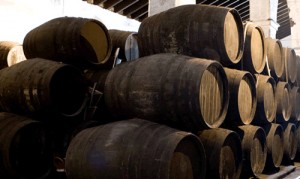 As recently as ten years ago, the average retailer in town might have offered ten or fifteen wines from Spain, mostly from Rioja and Jerez, with perhaps a couple of offerings from the then relatively new-fangled region known as Ribera del Duero. Much of the wine was old-fashioned, oaky stuff, many whites especially so to the point of being rancid and undrinkable. Even big-name producers seemed to have difficulty maintaining any kind of consistent quality.
What most of us were unaware of at the time, however, was that there had been a quiet revolution going on in the Spanish wine industry, beginning roughly at the end of the repressive Franco era in the mid-1970s. Old vineyards that had been neglected for over fifty years were being rediscovered: many of these vineyards had never recovered from the phylloxera epidemic of the late 19th century and had to be completely replanted. Many of these vineyards would be planted to grape varieties previously little known in Spain as growers attempted to push the boundaries of traditional viticulture and wine-making.
Spanish winemakers began to travel abroad, bringing back with them new technologies and techniques. Old growing regions which had suffered in the 20th century were revived by the trend towards big, full-bodied reds and crisp, zingy whites.
By the early 90s, producers from outside the traditional regions were beginning to export their wines to the rest of Europe and particularly to the Unites States, where their accessible, fruit-driven style would prove immensely popular. This was (and is) a style that reflected contemporary taste and the influence of university wine courses in France, Australia and California. This new wave of Spanish wines would go on to garner enormously favorable press from American critics, especially from Robert Parker’s Wine Advocate.
Initially the new wave of Spanish wine was introduced into the United States by a small handful of visionary importers, including the now legendary Jorge Ordonez. Now there are a couple of dozen high quality, discerning importers who make it their mission to bring new and previously unheard-of wines and winemakers to these shores. Pre-eminent amongst these are European Cellars, De Maison Selections, Classical Wines and Wines of Spain. Any one of these names on the back label of a Spanish wine is a virtual guarantee of quality.
Today, previously unknown regions such as Priorat, Montsant, Toro and Bierzo are, if not exactly household names, then at least widely known by wine drinkers across the country. The range of wine styles now emerging from Spain is quite startling, considering that, until very recently, the most popular exports were Sherries and heavily oaked reds from Rioja.
Here is a small sampling from the dozens of Spanish wines we’ve tasted recently. Each is loaded with personality and displays the essence of its regional style, whether traditional of modern.
Bodegas La Cigarrera Manzanilla | Sanlucar de Barrameda
*SALE: $9.99/375ml
The town of Sanlucar de Barrameda, just down the coast from Jerez in the far south of Spain, is famous for its bone dry fino-style sherry known as Manzanilla. Generally fresher and brighter than Jerez fino, Manzanilla makes the perfect accompaniment to traditional tapas dishes like olives, anchovies and almonds.
This outstanding dry sherry begins with a huge, complex, penetrating and fragrant nose of tree bark and green walnuts with undertones of yeasty bread. The aromas continue to the palate, which is marked by a distinct salinity. There’s real depth and persistence as well as wonderfully refreshing acidity. Amazing stuff!
Viňa Caneiro 2009 | Ribeira Sacra (Galicia)
PRICE: $27.99
This is one of the most remarkable and distinct Spanish reds I’ve tasted in quite a while. Grown on steep terraced vineyards in the far northwest of the country, it perfectly reflects the slate and granite soils upon which these 80 year old vines eke a precarious living. This area has been planted to vines since the ancient Romans occupied Spain two thousand years ago, so there’s also a real sense of history here.
Produced from the Mencia grape, using indigenous yeasts and minimal intervention, Viňa Caneiro most closely resembles a great Burgundy in both texture, structure and complexity. Unlike many Spanish reds from warmer climates, this possesses and elegance and balance in spite of its 14% alcohol. Packed with black fruits, ripe but firm tannins and a pronounced mineral component, this is a great food wine whose natural acidity would make it a wonderful partner to duck, game or spiced pork dishes. It would also pair beautifully with stronger blue cheeses from the region.
Joan d’Anguera Planella 2009 | Montsant
40% Mazuelo (Carignan), 20% Syrah, 20% Grenache, 20% Cabernet Sauvignon Monsant Spain
*SALE: $16.49
The D.O. of Montsant is one of the most exciting wine regions in the world today, producing many reds and whites of exceptional quality at reasonable prices. Surrounding the district of Priorat, southwest of Barcelona, most of its vineyards lie at an altitude of around 1000 feet, and occupy mostly clay and calcerous soils. As many of the region’s vineyards fell into disrepair after the phylloxera blight of the late nineteenth century, little wine of quality emerged from here until the early 1990s. The Anguera family estate, which dates back 200 years, was one of the first to replant extensively with Syrah.
This ripe and rich red starts with a lovely kirsch-like nose, accented by stony, flinty undertones. The palate features more of the same, with a somewhat peppery , orange-peel quality to the fruit. Concentrated and expansive, it coats the palate with layers of cherry fruit and firm but ripe tannins. Think of a high-quality Chateauneuf du Pape, and you’ll get the picture
*Sale Prices are good while supplies last through 8-31-2011.

Very interesting article Neil. Even though I have worked at V&T for many years, it isn’t until recently that I’ve started to enjoy more aspects of wine than just drinking it.
Although I’ll never be a connoisseur like you, I enjoyed this post and look forward to many more.
Thanks.
Very informative, Neil. I think that the greatest thing to happen in Spain over the past few years has been the focus on place. By this, I mean producing wine from a region that showcases the unique aspects of that region. Bierzo is a great example of this. As recently as four or five years ago, most “wine people” couldn’t have been able to tell you anything about Bierzo, except to say thta it’s a region in Spain where they grow grapes. Now it is one of the hottest areas for quality, terroir-driven wines on the planet! Do not miss out on these wines. The quality to value ratio is about as high as it gets.
And don’t forget, not all Sherry is sweet. For a real treat, try La Cigarerra Manzanilla Sherry with a steak. Yes, Manzanilla Sherry is outstanding with red meat!